

• Menu
  • Skip to right header navigation
  • Skip to main content

Young Friends of the Earth Europe

  • Who we are
    • How we work
    • Steering group
    • Working groups
    • FoEE and FoEI
  • What we do
    • Resources and materials
    • Upcoming events
    • Youth Policy Academy
  • Join us
  • Search
  • Who we are
    • How we work
    • Steering group
    • Working groups
    • FoEE and FoEI
  • What we do
    • Resources and materials
    • Upcoming events
    • Youth Policy Academy
  • Join us
  • Search

How is EU policy made?

    Project partners  –    Contact us   

How is European Union policy made?


EU rules and regulations can sometimes seem distant and vague, but they actually have a profound impact on our lives in Europe. So what is EU policy, and how is it made? And most importantly, how can you influence policymaking on the issues that matter to you? We created this page to give you answers to these questions.

Who makes policy and legislation?

Policy and legislation are made by four decision-making institutions of the European Union.

EUROPEAN COMMISSION
The European Commission is led by the President of the European Commission, Ursula von der Leyen. Every five years the President appoints 27 Commissioners (one from each EU Member State) who are assigned a policy area and one or more departments of administrative workers to oversee. These departments are called Directorates-General. The Commission is responsible for proposing European legislation, overseeing its implementation, managing the budget, and representing the EU internationally. It is the largest European Institution with over 32,000 workers.
EUROPEAN PARLIAMENT
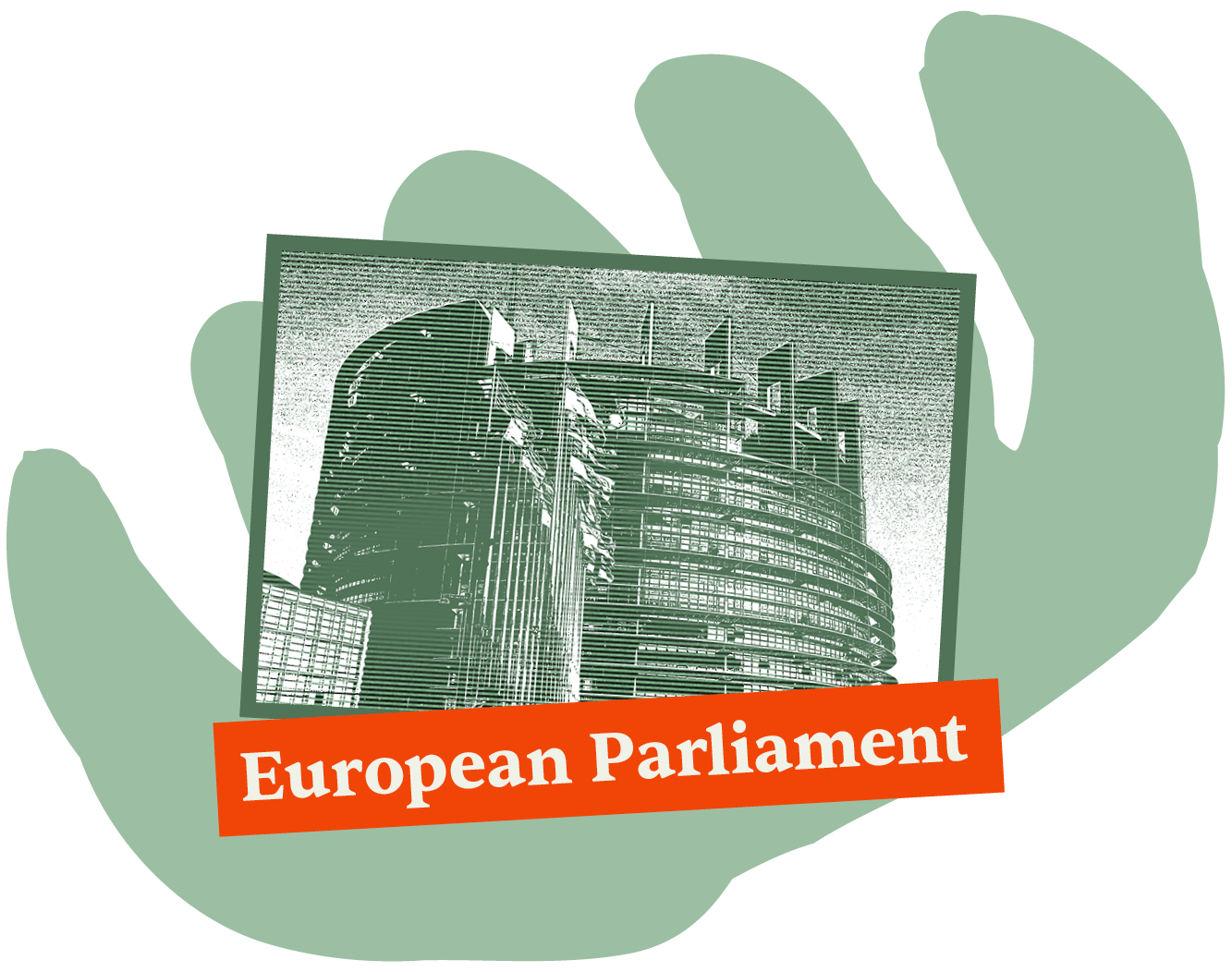
The European Parliament is made up of 720 Members of the European Parliament (MEPs), who are directly elected by voters in Member States every five years. The Parliament acts as a co-legislator together with the Council of the European Union, and has the power to adopt and amend legislation and to adopt or reject the budget. They meet for a Plenary session in Strasbourg 12 times a year, which is where legislation is debated and voted on.
EUROPEAN COUNCIL
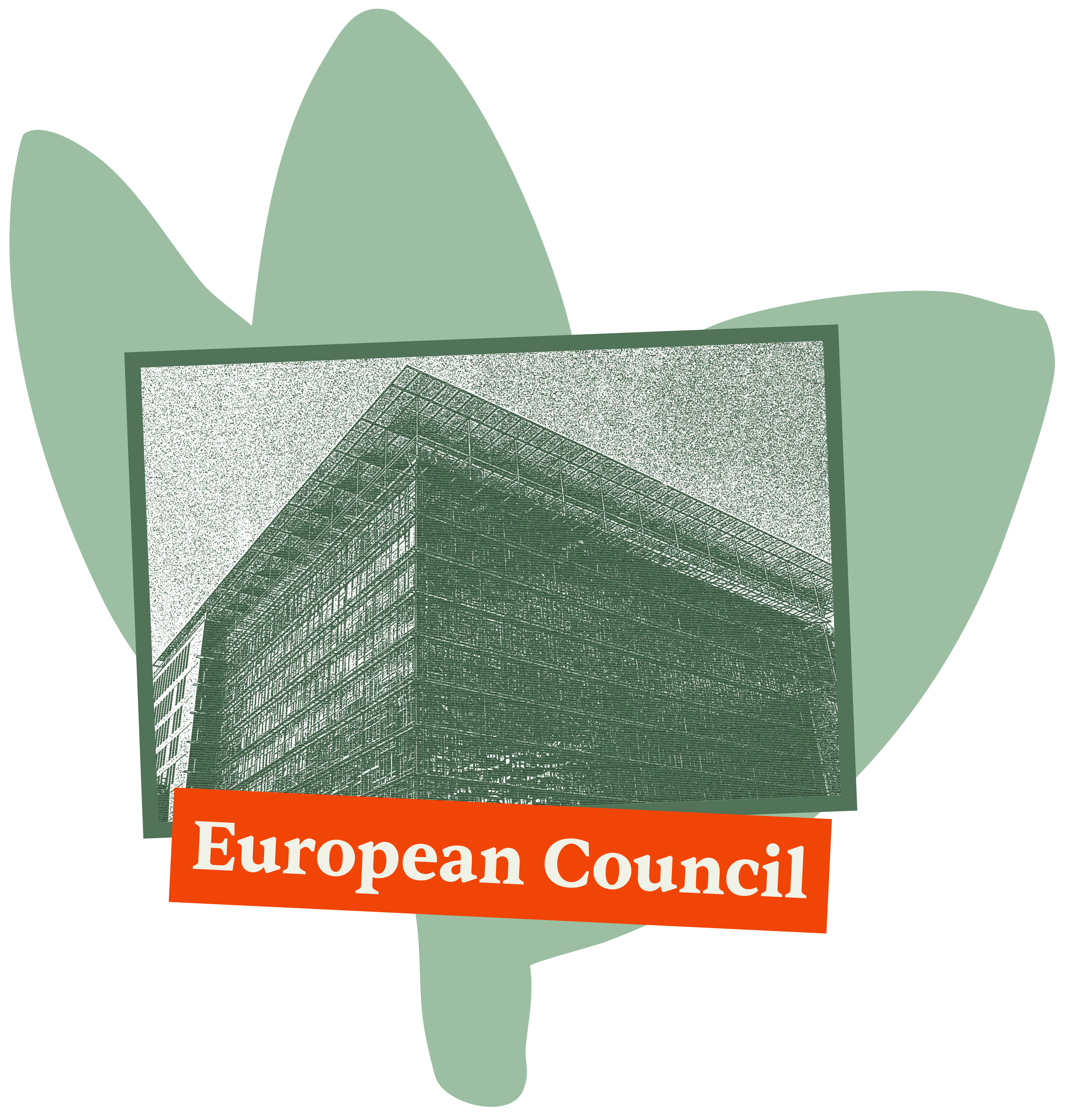
The European Council is made up of Heads of State/Government of each Member State, the president of the European Council, and the president of the European Commission. The role of the European Council is to define the overall political direction and priorities of the European Union. They typically meet four times a year. The European Council does not pass laws.
THE COUNCIL OF THE EU
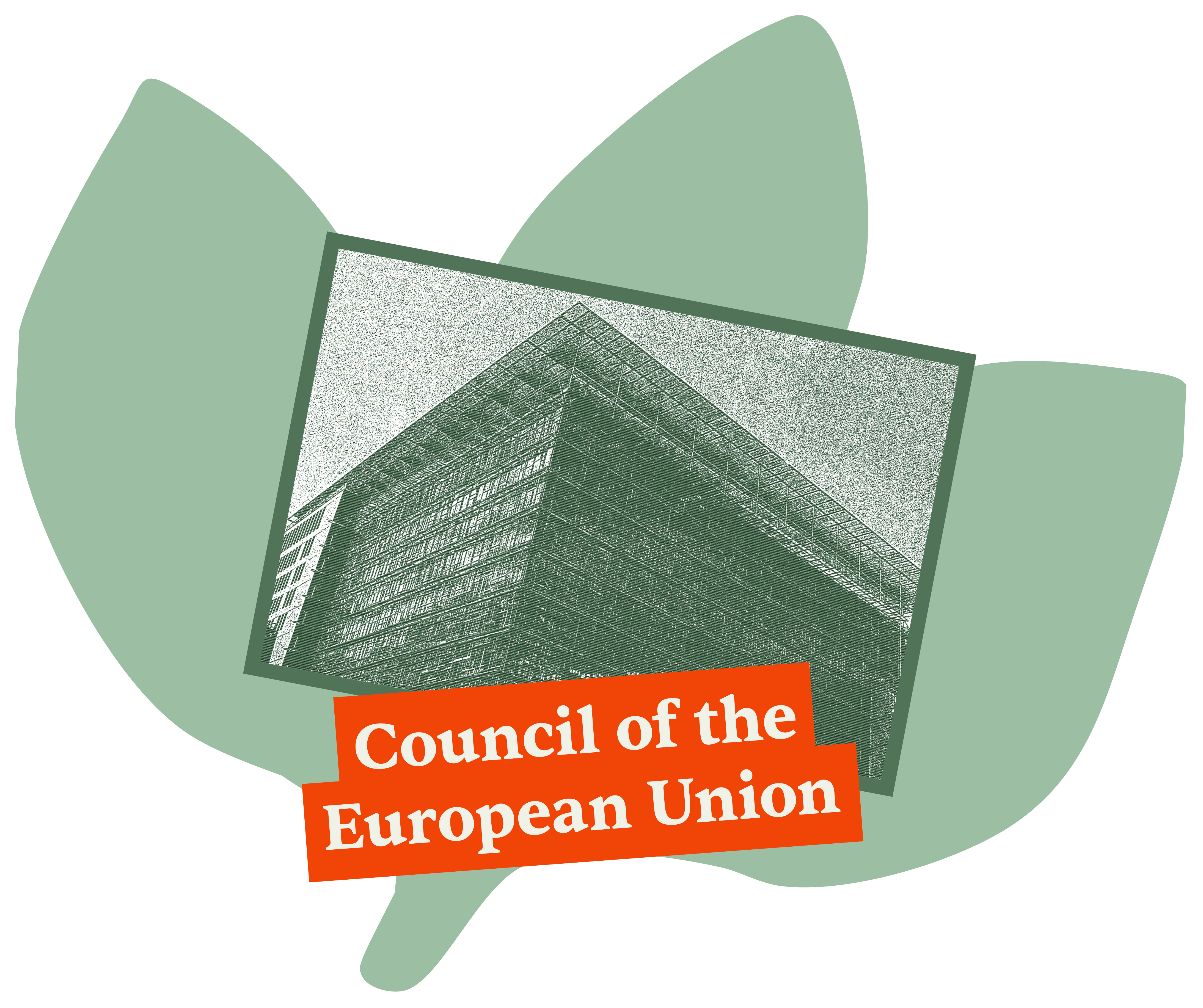
The Council of the European Union is made up of national ministers and Permanent Representatives from Member State governments. They meet in different configurations according to the policy area being discussed – agriculture ministers will meet to debate agricultural policy, energy ministers will meet to debate energy policy, and so on. The Council acts as a co-legislator together with the European Parliament, and has the power to adopt and amend legislation and to adopt or reject the budget.

NOTE: It’s easy to get your Councils mixed up, but the European Council and the Council of the EU are different institutions with different roles and members. Together they are often referred to simply as “the Council”. On top of that there is a third council in Strasbourg, the Council of Europe, which is not an EU institution but a completely separate international organisation.

What can the EU make policy about?


The policy areas of the EU are defined in Treaties, which are legally binding international agreements that are signed and ratified by all Member States. In most areas EU policy must be made according to the principles of Proportionality and Subsidiarity.

Proportionality

The content and scope of EU action may not go beyond what is necessary to achieve the objectives of the treaties.

Subsidiarity

In the area of its non-exclusive competences, the EU may act only if the objective cannot be sufficiently achieved by the Member States, but could be better achieved at EU level.

The Treaties set out different levels of control that the EU can have over policy areas, which are called Competences. There are three main types of competences:

Exclusive competences
In these policy areas the EU alone is able to create legislation, which must be implemented by Member States.
Example policy areas:
Trade
Competition
Monetary policy
Shared competences
In these policy areas both the EU and its Member States are able to create and implement legislation. We can further distinguish between Shared competences and Parallel competences. Shared competences come with a principle of “pre-emption”, while Parallel competences do not. The principle of “pre-emption” means that once the EU has made legislation, national legislation must conform to it.
Example Policy Areas with Shared competences:
Internal market
Agriculture
Environment
Energy
Example Policy Areas with Parallel competences:
Development cooperation
Humanitarian aid.

Supporting competences
In these areas the EU can only intervene to support, coordinate or complement the action of its Member States.
Policy areas
Health
Industry
Culture
Tourism
Education
Civil protection

Different types of EU policy

There are several different types of policy that the EU makes, and it’s useful to understand the difference between Strategy and Legislation. Strategy sets out the vision for what needs to be achieved and how. Legislation enshrines in law the commitments necessary to carry out the strategy.

Here are a few examples:

Strategy
Zero Pollution Action Plan
Legislation
Water Framework Directive
Strategy
The European Green Deal
Legislation
European Climate Law
Strategy
Farm to Fork Strategy
Legislation
General Food Law
Common Agricultural Policy (CAP)

How is policy made?

The process for making EU policy is called the Ordinary Legislative Procedure.
The European Commission proposes new policies and drafts legislation.
During the first reading, the European Parliament and the Council review the proposal in parallel and suggest amendments. It is common for the two institutions to have different views.
When differences arise, informal negotiations called trialogues take place. These involve the European Parliament, the Council, and the European Commission. Several trialogues may be needed to reach an agreement.
If the Parliament and the Council reach an agreement, both institutions vote on the final text. If approved, the legislation becomes EU law.
If no agreement is reached, the proposal moves to a second reading, where both institutions review it again.
In very rare cases when the Parliament and the Council still cannot agree after the second reading, a Conciliation Committee is set up to find a compromise. The Conciliation Committee is made up of an equal number of representatives from the Parliament and the Council.
If after their deliberations they approve the legislation it becomes law. If they vote to reject the legislation it is officially rejected.

How is policy implemented?


After a piece of legislation becomes law, the Member States take to the stage. Regulations and Decisions automatically become binding on the date of their application, but Directives are different, as Member States must incorporate them into their national legislation.  


This implementation stage provides ample opportunity for anyone in the EU to influence legislation. Here is an example from Austria showing what that could look like.
Deposit-refund system in Austria
The EU DirectiveThe Single-Use Plastics (SUP) Directive came into force in July 2019. It banned several single-use plastic items, set targets for separate collection and recycled plastic use, and ensured that manufacturers pay for the waste management and clean-up of several items. Member States had two years to transpose and implement these measures in national law.
The government studyA government study showed that the best and cheapest way to achieve these targets was to introduce a new deposit system in Austria. GLOBAL 2000 / Friends of the Earth Austria took the opportunity to launch an opinion poll to measure what Austrians think of the idea. The results were overwhelming support for the deposit system and stronger measures against plastic pollution.
The campaignIn 2020 GLOBAL 2000 launched a campaign demanding that the government “pfand drauf” (“put a pledge on it”). They managed to mobilise 35 000 people for the cause – and it worked! Since the beginning of 2025, a €0.25 deposit is required on all plastic bottles and cans from 0.1 to 3 litres.

Read the whole story from GLOBAL 2000
What’s the European Green Deal?
In brief
Launched in 2019
Aims to achieve net-zero emissions by 2050
Investing €20 billion to achieve a Just and Fair Transition
Policy areas
Climate action
Energy
Just transition
Circular economy
Industry
Transport
Biodiversity

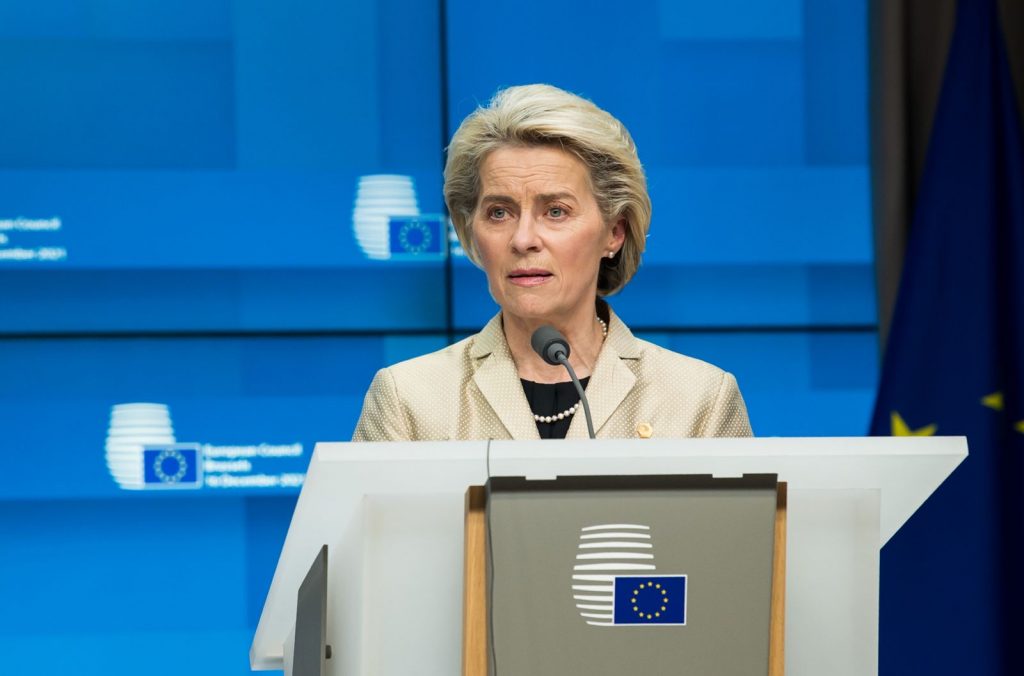
The European Green Deal was launched in 2019 by president of the European Commission Ursula von der Leyen, in response to citizens’ urgent call for climate action. The European Green Deal sets out a plan to make Europe’s economy, energy, transport, and industries more sustainable.

The target is set for Europe to become the first climate neutral continent by 2050, and enshrined in the 2021 Climate Law and Low Carbon Development (Amendment) Act. A budget of nearly €20 billion has been allocated to ensure that the transition to a climate-neutral economy happens in a fair way, leaving no one behind. The European Green Deal sets out commitments in a wide range of policy areas including energy, circular economy, agriculture, industry, transport, and biodiversity. For example, the reduction of transport emissions by 90% by 2050; and ensuring 25% of agricultural land is organic by 2030.

While the language used in this deal is full of promise and attempts to paint a picture of a bright future, Friends of the Earth Europe and many others have criticised it as too little too late. If we are to undo climate damage and support people and communities living with its impacts, we need more ambitious commitments. 

But a new deregulation campaign that is sweeping the EU threatens to weaken the commitments in the European Green Deal. The Omnibus One package launched in early 2025 puts many existing social and environmental rights and protections at risk in the interests of ‘creating a more favourable business environment.

Find out more about deregulation.

Who influences EU policymaking?
European institutions
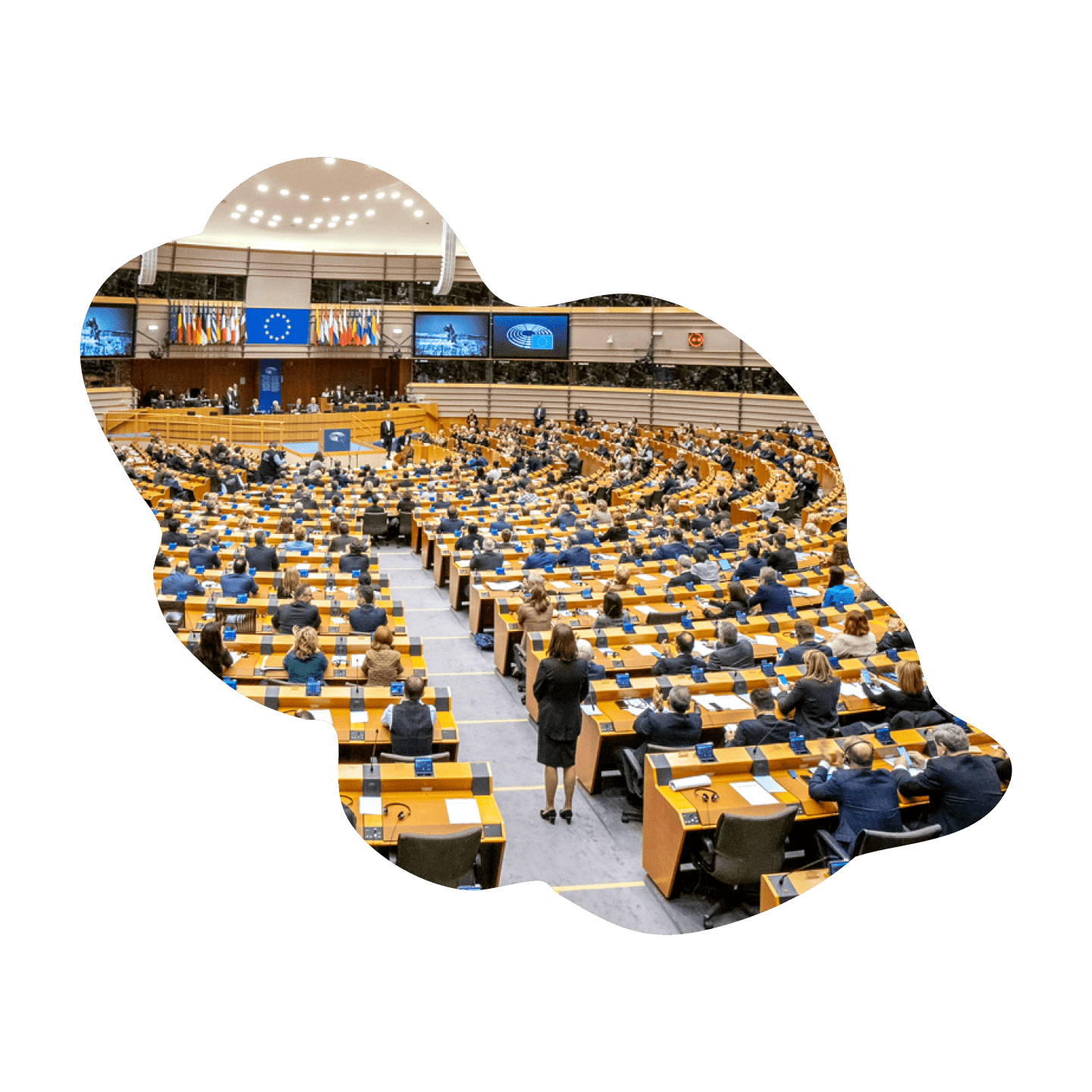
Each EU institution has its own priorities. The European Commission protects the interests of the EU, the Council prioritises the interests of Member States, and the European Parliament prioritises the interests of their constituencies. How well they can balance these interests and work together has a huge influence on policymaking.
Citizens
Nothing about us without us. The EU is a democratic institution and its power comes from the people. EU citizens have multiple points of contact with the EU such as going directly to an MEP, sending a petition to the European Parliament, or participating in the European Commission’s public consultations on the “Have your say” platform.
Civil society groups
Civil society groups are here to do what the central power can’t or won’t do for the people. At the EU level, they carry the people’s voice to the institutions, hold governments and corporations to account, and provide expertise to policymakers. They are an essential part of any democratic system.
Business
Businesses have significant lobbying power in Brussels, which they use to push for policies that allow them to increase their profits. According to Corporate Europe Observatory, corporations and trade associations are spending least €343 million a year on lobbying – and the figure is likely to be higher because not all of them fully declare this spending. Big Tech (€67 million), Energy (€45 million) and Banking and Finance (€53.75 million) are the top spenders.
Member State governments
Living apart together. The Member States of the EU share some aspects of their own sovereignty through the EU institutions which guarantees them certain privileges and obligations. Still, national interests remain a key factor in the EU’s day-to-day operations.

How can you make your voice heard?


You could start by learning more about our Working Groups here  or by reading the stories of some of our members:

Wrestling with the system for a liveable future

Read Tobias’ story.

Oh wait… am I even a climate activist?

Read Abigail’s story.

Useful resources


EU Changer


EU Advocacy Toolbox


European Youth Forum


Advocacy Handbook


Council of Europe


Youth e-learning platform


Council of Europe


Toolkit for participatory youth policy-making

Get involved
Find out more about our Working Groups.
Policyfinder
Find EU policy on the issues that matter to you.

This website was produced by Friends of the Earth Europe with the financial support of the European Youth Foundation of the Council of Europe. The views expressed do not necessarily reflect the official position of the Council of Europe.
Site Footer

Contact Us Our Funding Privacy Policy Terms & Conditions

This translation won’t be perfect

We use Google Translate to automatically translate content form our site into a number of languages spoken across Europe. However, please be aware that, since translations are done by machine, they may not always be perfect.

We do not own, manage or control any aspect of Google Translate and are not responsible for the translations it provides. We do not make any promises, assurances, or guarantees as to the accuracy, reliability, or timeliness of the translations provided.

We can only verify the validity and accuracy of the information provided in English and, because of this. As such, the English version of our website is the official text. We cannot be held liable for any inaccuracies or errors in the translation and shall not accept liability for any loss, damage, or other problem, including without limitation, indirect or consequential loss or damage arising from or in connection with use of the Google Translate Service. By using Google Translate, you understand and agree to this disclaimer. If there are any concerns regarding the accuracy of the information presented within the translated versions of our site, please refer back to the English language website.